Big opportunities at Open House Ministries often show up when we least expect them. They draw us in new directions, and we pause to seek what God has in mind for the next chapter in the ministry.
Recently, one of those big opportunities was given to us in the form of three properties adjacent to OHM West, our new location near the Kendall Family Shelter on West 12th and Jefferson. Generous donors in our community have taken an interest in those spaces next to our new apartment complex and purchased them for the ministry.
This new opportunity is very exciting, as we consider the possibilities for serving our community. We see the deeper needs of individuals around us each day, and consider the positive impact we could have with more services available to help heal our hurting families and
children.
Expanding the ministry always brings us to seek God’s guidance first. How to best use new spaces in a way that will serve the families in our program and strategically make the most of the opportunity. Many great ideas have already been presented, and we look forward to seeing how God unfolds the plans for the new spaces.
In the meantime, we have been working with the owners of the three properties, making sure there was plenty of time given for tenants to relocate. Our ministry continues to grow with the support of many private donors, businesses, faith-based organizations, and church friends. We’ve seen God move with incredible grace to heal the families who have come into our shelter for over 40 years. And we are in awe of Him.
Please know how important it is to us to keep God at the center of our plans, and pray for us as we chart a new direction with this opportunity we’ve been given. So many people are hurting around us, and we want them to hear the gospel of Jesus Christ.
Thank you for your continued support for Open House Ministries. We are excited to share what God will be doing in this new space, so stay tuned. Good news is on the way.
Blessings,
Reneé Stevens
Executive Director
Charting a New Direction
From the executive Director

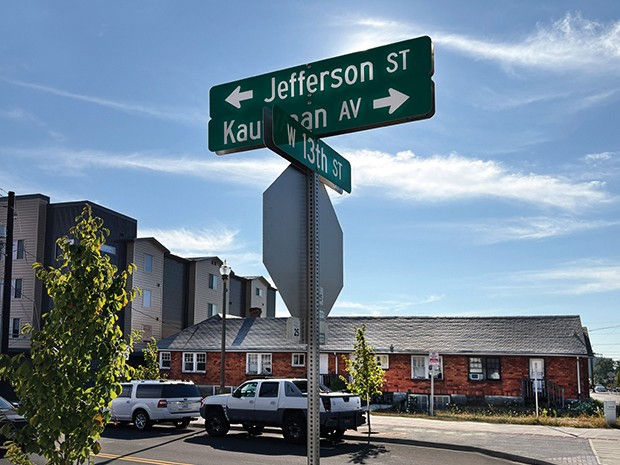
Property located at the corner of W. 13th St. and Jefferson, across from the OHM Family Resource Center
Shining a Light in the Neighborhood

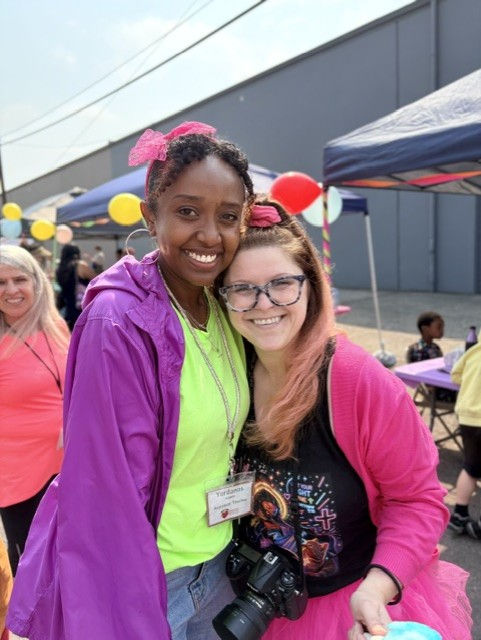
The neighborhood surrounding Open House Ministries was filled with music and the aroma of barbecue during this year’s annual Block Party & Resource Fair on August 13th. Guests were treated to cotton candy and popcorn while kids had fun playing carnival games and taking turns dropping staff members and board directors in a chilly dunk tank.
Over 55 organizations packed the family resource center’s gym and parking lot, sharing vital information and services. The Humane Society for Southwest
Washington was on hand providing wellness checkups, chipping, and annual while handing out frozen treats. Morning hosts from Positive Life Radio set up their sound system, filling the air with Christian music throughout the event.
The success of the block party and resource fair depends on the support of many volunteers and organizations that reach out to help from early-morning setup to the end-of-day teardown. They helped serve food during the barbecue and entertained kids shots for cats and dogs. New this year included a HEP-C testing
service from HCV Elimination. The mobile unit from Washington State’s Department of Social & Health Services returned to help guests.
Members of the Rotary of Greater Clark County kept our grills busy during the barbecue, hair cutters from Deltennium Great Clips PNW provided free haircuts, and the Yum Truck Missions Group from Vancouver Church shared the gospel at carnival stations, worked the popcorn and cotton candy machines, and kept a watchful eye, providing safety during the event.
We can’t thank everyone enough for stepping up to serve alongside our staff and board directors this year. This event would not be possible without the service and help from everyone involved. Thank you for shining a light at Open House Ministries.